
Can Anyone Learn to Draw? What Talent Really Means
Can anyone learn to draw realistically? Yes: drawing is a set of learnable skills. Here's what talent is, what isn't, and how beginners actually improve.
By Ayoub Farid · · 2 min read
"I can't even draw a stick figure." It's one of the most common things people say about drawing, and it's almost never true. Drawing realistically is a skill, like typing or cooking. Some people pick it up faster, but nearly everyone can learn it.
What people call "talent"
When someone draws well, we see the result, not the hundreds of hours behind it. What looks like talent is usually:
- Early practice. They drew a lot as kids and never stopped.
- Good habits. Light sketch lines, building values slowly, checking proportions.
- Knowing what to look for. Where the shadows go, how edges change, what to leave white.
All three can be learned.
The skills behind a realistic drawing
| Skill | Can it be learned? | How |
|---|---|---|
| Steady lines and circles | Yes | Short daily warm-ups (drills) |
| Seeing values (light vs dark) | Yes | Value scale, squinting |
| Placing light and shadow | Yes | Rules that work every time (light and shadow) |
| Proportion | Yes | Measuring techniques (proportions) |
| Patience | Yes | Small steps and short sessions |
Nothing on that list requires a special gift.
Why beginners think they can't
- They start with the hardest subject (a face) and get discouraged.
- They draw outlines hard and dark, so everything looks flat.
- They compare themselves to experts online.
- Nobody tells them what to fix, so they repeat the same mistakes.
Fix the method and the results change. Read common beginner drawing mistakes.
What progress actually looks like
A first shaded sphere usually has flat grey shading, a dark outline and no highlight. A few days later, after learning where the core shadow and cast shadow go, the same person draws a sphere that looks round.
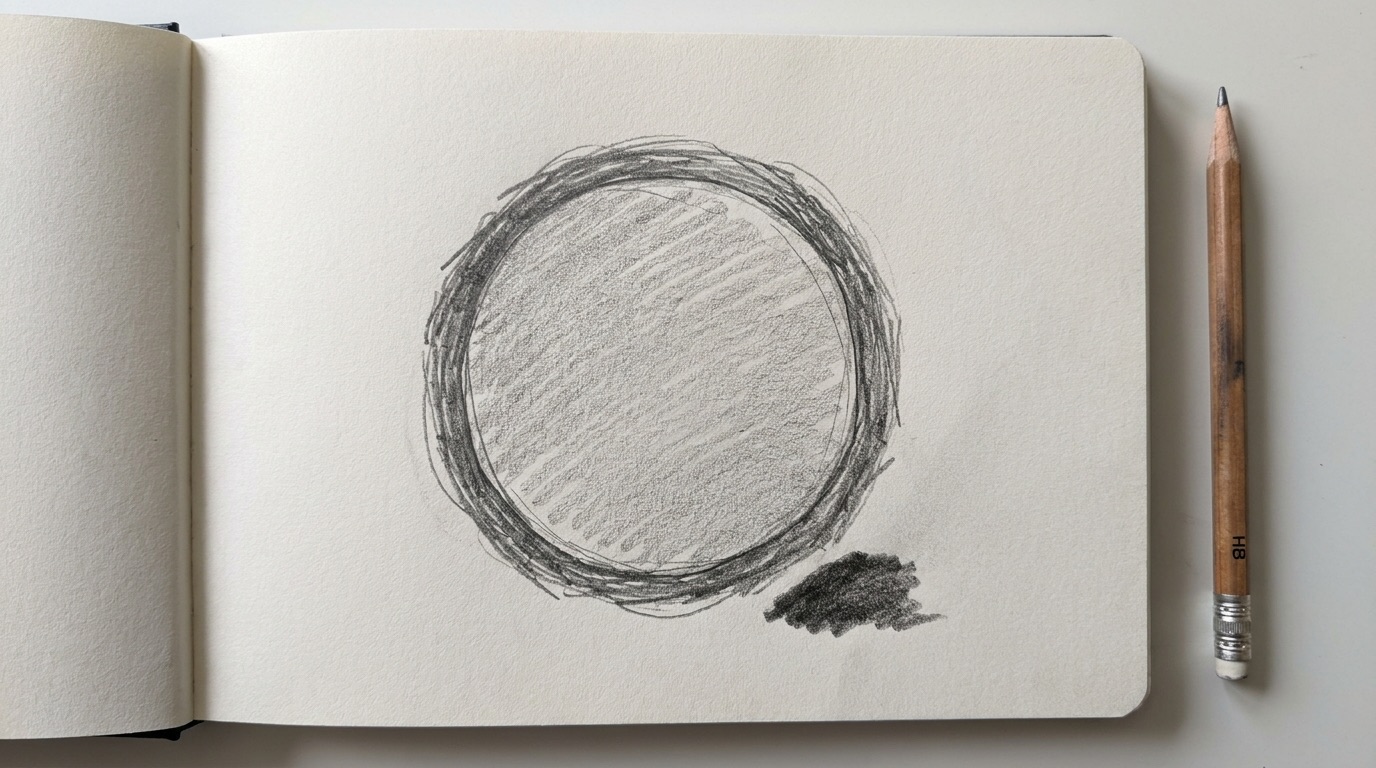
That jump doesn't come from talent. It comes from knowing three rules and practicing them.
How to find out for yourself
Give it two weeks:
- Do a value scale.
- Shade a sphere, then do it again after reading about core shadows.
- Draw an egg from a reference.
- Put the first and last drawings side by side.
Graphite is built for exactly this: small steps, a photo, and what to fix after each one.
Frequently asked questions
Is drawing ability genetic?
Some people may start with small advantages in visual memory or fine motor control, but for reaching a solid, realistic level, regular practice with good feedback matters far more.
I have shaky hands. Can I still draw?
Yes. Light, layered strokes and resting your hand on the paper (with a scrap sheet underneath) help a lot. Many realistic techniques rely on gradual layering, not one perfect line.
What if I'm colorblind?
Pencil drawing is all about value, not color, so colorblindness is rarely a problem.