
Cast Shadow Drawing: How to Draw Shadows on the Table
How to draw cast shadows: direction from the light, shape, the dark contact shadow under the object, and soft edges that fade with distance.
By Ayoub Farid · · 2 min read
A cast shadow is the shadow an object throws onto another surface. Without it, objects float. With it, they sit on the table and the whole drawing becomes believable.
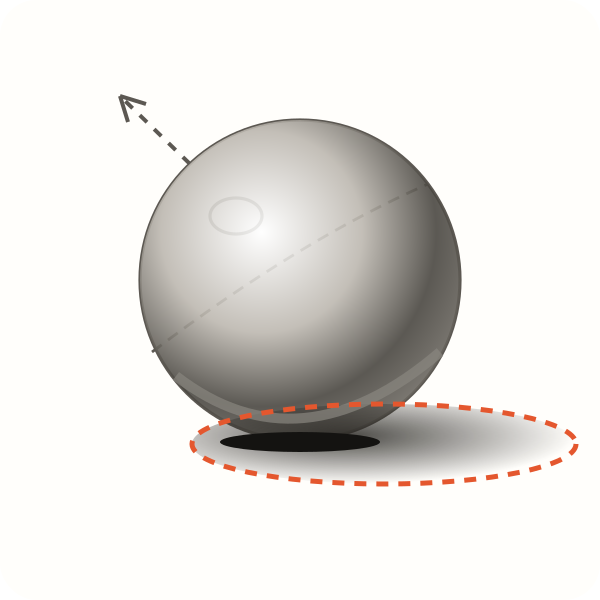
1. Direction
The cast shadow falls on the side away from the light. Light from the top left → shadow to the lower right. The higher the light, the shorter the shadow; a low light makes long shadows.
2. Shape
The shadow's shape follows the object and the surface:
- A sphere on a table casts an ellipse.
- A cube casts a shape based on its corners.
- A mug's handle casts its own small shadow.
On a flat table seen from above at an angle, cast shadows look flattened, like ellipses.
3. The contact shadow
Right where the object touches the surface, light can't get in at all. This thin, very dark area (often called the occlusion or contact shadow) is usually the darkest value in the whole drawing.
Graphite's sphere tip: "The cast shadow is darkest where the ball touches the table."
4. Fading and softening
As the shadow moves away from the object:
- it gets lighter
- its edges get softer
A shadow that's equally dark and sharp all over looks like a black sticker.
Step by step
- Decide the light direction.
- Lightly outline the shadow shape on the table.
- Shade it in a medium tone.
- Darken right under the object, almost black at the contact point.
- Soften the far edges with light strokes or a blending stump.
Common mistakes
| Mistake | Fix |
|---|---|
| Shadow on the same side as the light | Draw a light arrow first |
| Uniform dark blob | Darkest at contact, lighter and softer away |
| Gap between object and shadow | The shadow must touch the object |
| Hard outline around the shadow | Soften the edges |
Practice: draw three objects in a row under one lamp and focus only on their cast shadows, comparing their shapes, edges and darkness.
Frequently asked questions
Is the cast shadow darker than the form shadow?
Near the contact point, usually yes. Further away it can be lighter than the core shadow.
What color is a cast shadow?
In pencil drawing we only care about value. Shadows aren't pure black; they're a range of darks.
Do cast shadows change with multiple lights?
Yes, each light makes its own shadow. Beginners should use one light to keep things clear.
Related: form shadow vs cast shadow, core shadow.