
How to Blend Pencil Shading Smoothly (Tools and Tips)
How to blend graphite pencil: blending stumps, tissue, layering without tools, when not to blend, and how to avoid muddy, shiny shading.
By Ayoub Farid · · 2 min read
Blending smooths graphite into even tones, great for skin, eggs, metal and soft shadows. Done badly, it makes drawings muddy and grey. Here's how to do it well.
First: layer well
The best blending starts with good shading underneath. Lay down tone in small, overlapping strokes, in light layers. Blending can't fix patchy shading; it just smears it. (Shade smoothly)
Blending tools
| Tool | Effect | Use for |
|---|---|---|
| Blending stump (tightly rolled paper, pointed) | Controlled, precise | Small areas, edges, details |
| Tortillon (smaller, hollow) | Fine detail | Tiny areas |
| Tissue or soft paper | Very soft, broad | Large smooth areas, backgrounds |
| Cotton swab | Soft, medium | Medium areas |
| Fingers | Blotchy (skin oil) | Avoid |
How to use a blending stump
- Shade the area with pencil first.
- Hold the stump at a low angle and use the side, not just the tip.
- Move in small circles or along the form, from light to dark.
- Clean it by rubbing on sandpaper or scrap paper when switching from dark to light areas.
A dirty stump can also "draw" soft tones on its own: use it to add faint shading near highlights.
When not to blend
- Highlights: blending pushes grey into white paper.
- Textured surfaces (orange peel, wood): blending erases texture.
- Everywhere: a drawing where everything is blended looks plasticky. Leave some pencil texture.
Avoid muddy blending
- Don't blend dark into light areas with the same dirty stump.
- Don't over-blend; stop when it's smooth.
- Re-establish darks and highlights after blending with pencil and kneaded eraser.
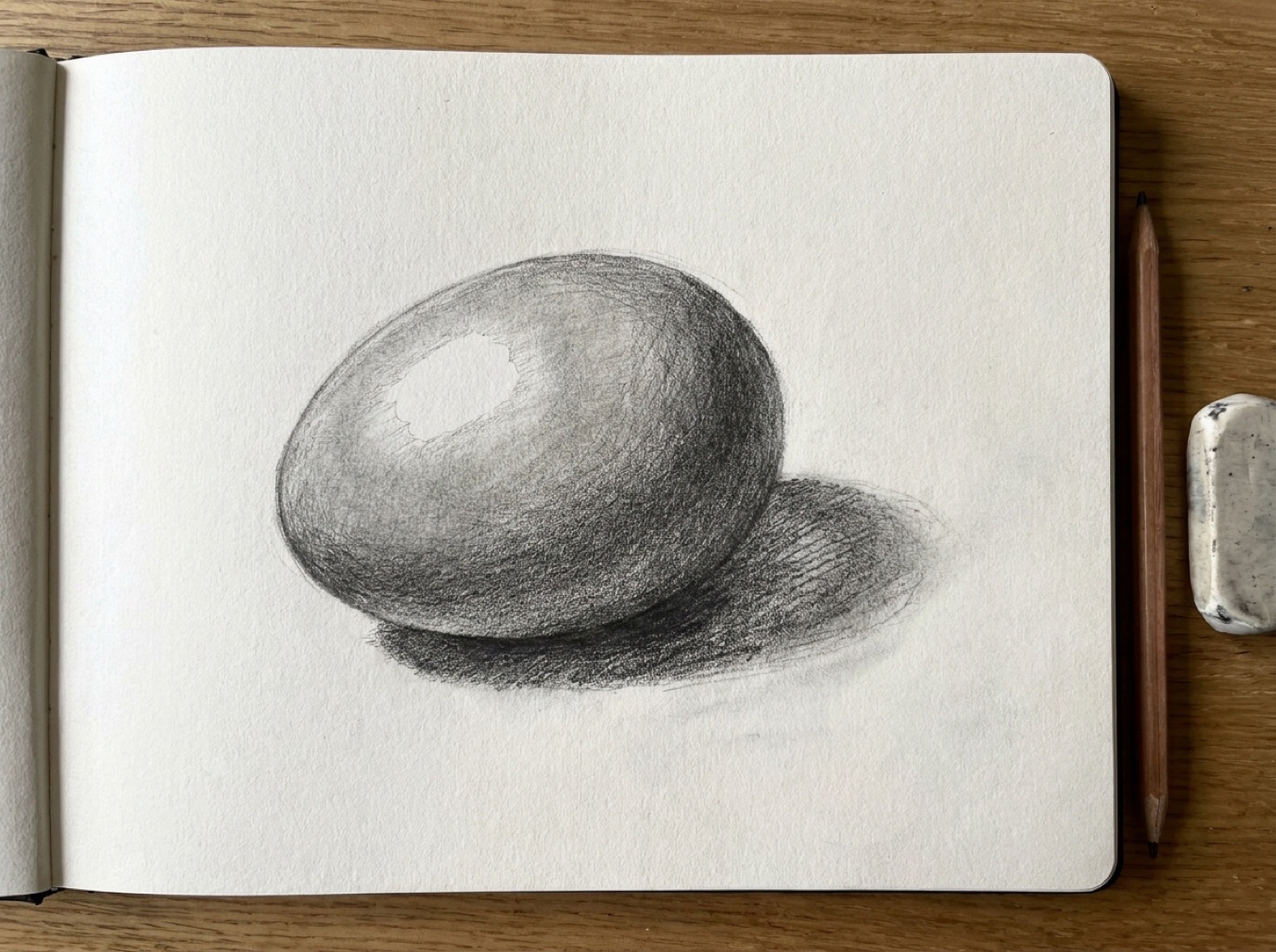
A blending practice routine
Shade three identical spheres. Leave the first unblended, blend the second with a tissue, and blend the third with a stump, then restore its darks and highlight with pencil and kneaded eraser. Compare them from a distance. Most people find the third looks best: blending for smoothness, followed by a final pass of pencil to bring back contrast and edges. That's the workflow to adopt.
Frequently asked questions
Is blending cheating?
No. It's one technique among many. But learn to shade evenly without it first; it makes your blending cleaner.
Why does my blended area look shiny?
Too much graphite pressed into the paper. Use lighter layers and a softer pencil instead of heavy pressure.
Can I blend with my finger?
You can, but skin oil leaves blotchy marks that are hard to erase. A stump or tissue is cleaner.
Related: how to draw an egg, shading techniques.