
Pencil Shading Techniques: 6 Methods Every Beginner Should Know
Six pencil shading techniques explained (hatching, cross-hatching, stippling, circulism, contour shading and blending), with when to use each.
By Ayoub Farid · · 2 min read
There's no single "right" way to shade. Different techniques give different textures, and most realistic drawings mix several. Here are six to know, from most visible strokes to smoothest.
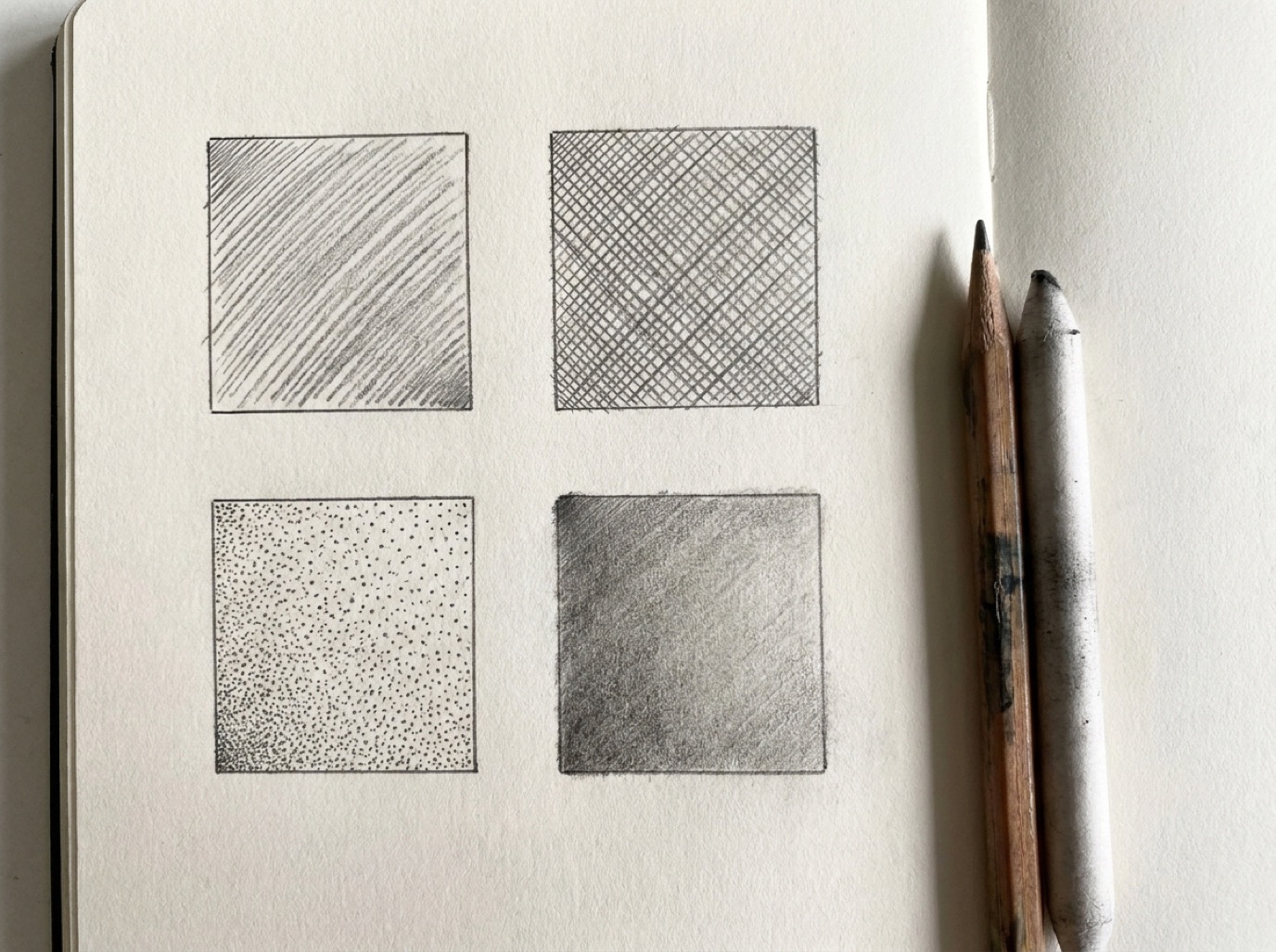
1. Hatching
Parallel lines. Closer = darker. Fast, clean, great for sketches. (Guide)
2. Cross-hatching
Layers of hatching in different directions. Builds dark tones with a woven texture.
3. Stippling
Dots. Density = value. Slow and textured; great for stone, sand and fruit skin. (Guide)
4. Circulism (scumbling)
Tiny overlapping circles. Produces very smooth, even tone without blending tools. Ideal for skin and soft surfaces.
5. Contour shading
Strokes that curve along the form, wrapping around it. Shows shape and value at once; perfect for fruit and cylinders.
6. Blending
Smooth graphite with a stump or tissue for a photo-like finish. (Guide)
Which technique for which subject?
| Subject | Good techniques |
|---|---|
| Sphere, egg | Circulism, blending, contour shading |
| Apple, pear | Contour shading, light blending |
| Mug, can | Vertical strokes along the cylinder, then blending |
| Wood, hair | Hatching following the grain/direction |
| Orange, lemon skin | Smooth base plus stippling for texture |
| Cast shadows | Layered strokes, blended edges |
How to practice
Draw six squares and fill each with one technique, from light to dark. Then shade the same sphere twice with two different techniques and compare.
The technique matters less than the values
A sphere shaded with hatching and one shaded with blending can both look perfectly round if the values are in the right places. Learn light and shadow first; technique is style.
A one-week technique tour
| Day | Technique | Subject |
|---|---|---|
| Mon | Hatching | Sphere |
| Tue | Cross-hatching | Cube |
| Wed | Stippling | Pebble |
| Thu | Circulism | Egg |
| Fri | Contour shading | Apple |
| Sat | Blending | Mug |
| Sun | Mix of your favorites | Small still life |
By Sunday you'll know which techniques feel natural to you and which subjects they suit.
Whatever technique you prefer, the value scale is the best place to test it before using it on a real subject.
Frequently asked questions
Which shading technique is best for realistic drawing?
Smooth layering (circulism or small strokes) with selective blending is common in realism. Hatching can be realistic too, especially in classical drawings.
Can I mix techniques in one drawing?
Yes. Most artists do: smooth skin, hatched hair, stippled texture.
What's the easiest technique?
Hatching, because it's forgiving and quick to control.