
How to Draw for Beginners: A Step-by-Step Guide
Learn how to draw from scratch: the supplies you need, warm-ups, values, light and shadow, and your first realistic objects, in the right order.
By Ayoub Farid · · 3 min read
If you've never really drawn before, the internet makes it look complicated: dozens of pencils, anatomy books, hour-long speed paints. You don't need any of that to start. You need a pencil, paper and a clear order of small steps.
This guide is that order. Each section links to a deeper guide when you're ready.
Step 1: Get a pencil and paper
An HB pencil and printer paper are enough for your first week. If you want to buy something, get an HB, a 2B and a 4B, a kneaded eraser and a pad of drawing paper. Details in drawing supplies for beginners.
Step 2: Warm up your hand
Draw from your elbow and shoulder, not just your wrist. Spend two minutes on:
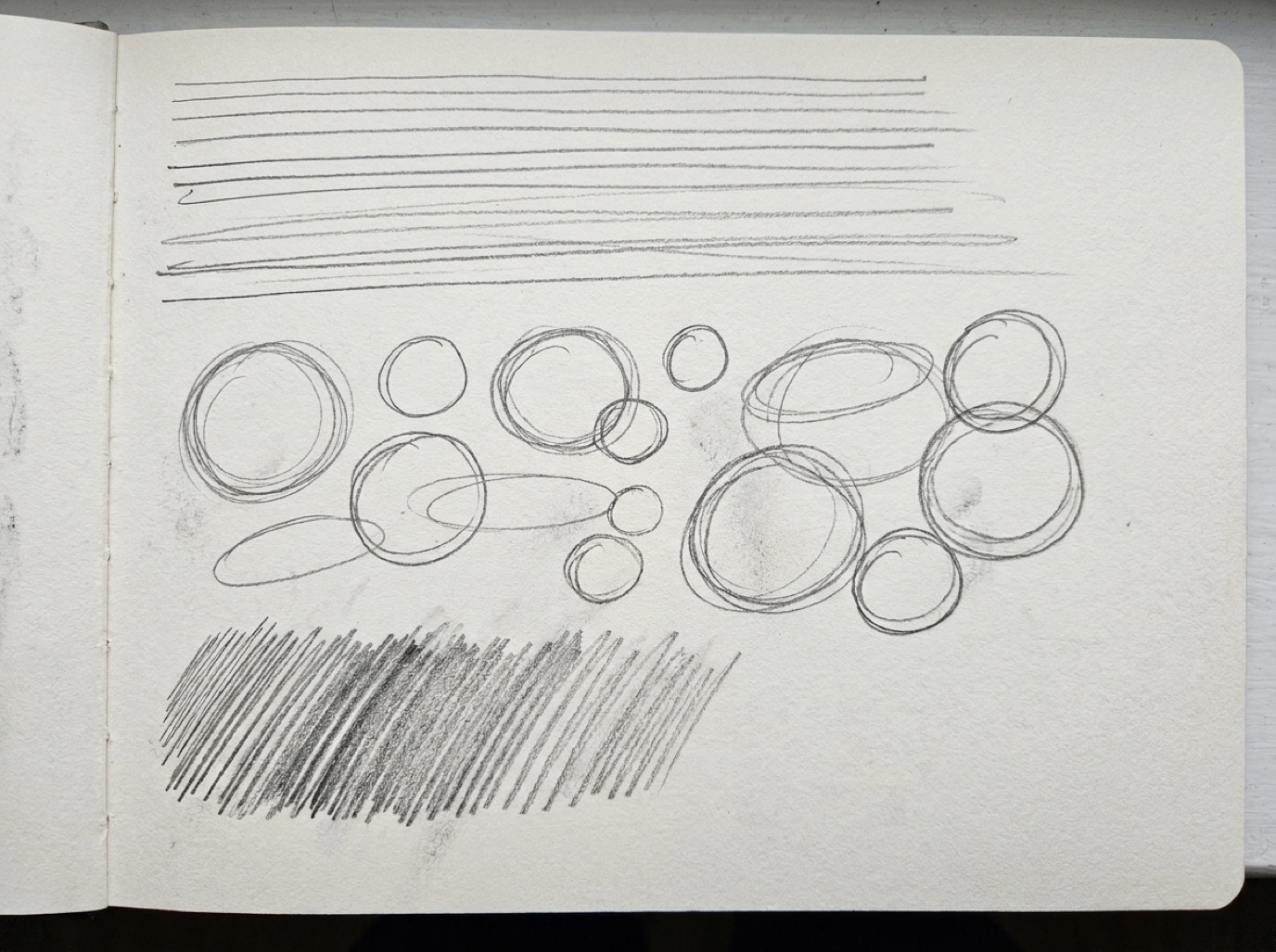
Keep pressure light. Light lines are easy to erase and easy to shade over.
Step 3: Learn value with a value scale
Draw five boxes in a row. Leave the first white, make the last as dark as your pencil goes, and fill the middle three with even steps. This one exercise teaches pressure control and layering. Guide: value scale.
Step 4: Shade a sphere
The sphere is the most useful drawing exercise there is, because everything round (eggs, fruit, eyes, heads) shades the same way.
- Draw a light circle.
- Decide the light comes from the top left.
- Shade the side away from the light, with the darkest band (the core shadow) just inside the edge.
- Keep a white highlight; add a cast shadow on the table.
Full walkthrough: how to shade a sphere.
Step 5: Draw simple real objects
Now apply the sphere to things on your table: an egg, an apple, an orange. Then try cylinders like a mug and boxy things like a book.
Step 6: Practice proportion with an eye
Once shading feels comfortable, try a subject where shapes and spacing matter: the eye. Guide: how to draw an eye.
Step 7: Make it a habit
Fifteen minutes most days beats a long session once a week. Short daily subjects are perfect for this (daily drawing practice).
The beginner rules worth remembering
- Sketch light, finish dark.
- Light comes from one direction; decide where before you shade.
- Leave highlights as white paper.
- Every object needs a cast shadow to sit on the table.
- Fix one thing at a time.
Get feedback as you go
The fastest way to improve is to know what to fix after each drawing. Graphite gives you these steps as short lessons, then checks a photo of your drawing and tells you what's working and what to change.
Frequently asked questions
What should a beginner draw first?
A value scale, then a shaded sphere. They teach the two skills everything else depends on: controlling light-to-dark and placing light and shadow.
How do I start drawing if I'm not creative?
Start by drawing what you see: simple objects under one light. Realistic drawing is about observation, which anyone can train.
Should I learn to draw with a pencil or a pen?
Pencil. It erases, layers and covers the full range of values, which is exactly what beginners need.